
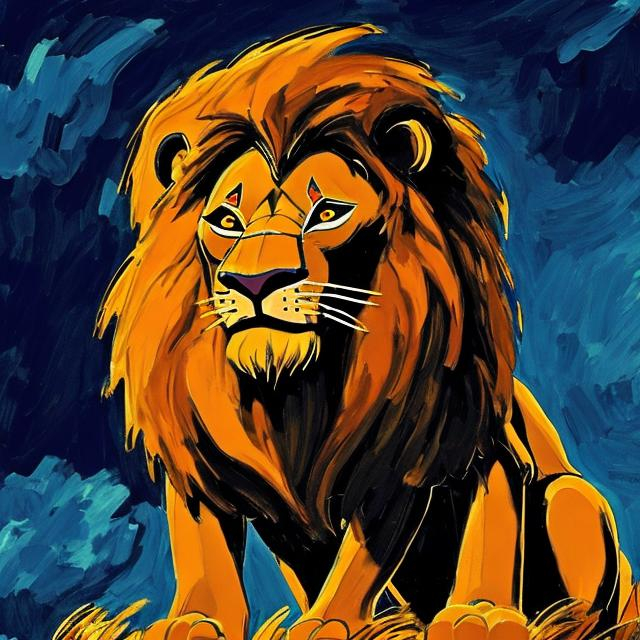
“The Lion King,” a tale as old as Shakespearean tragedy itself, dances on the precipice of existentialism, offering a somewhat darkly comedic reflection on the inherent absurdity of life’s eternal circle. Simba, our Hamlet-esque protagonist, grapples with his existential burden, which at times can feel like a tragic comedy, echoing the Danish prince’s torment over the perplexing nature of existence. Simba’s struggle to make sense of his place in this zany, animal kingdom is vividly portrayed during his exile, where he embarks on a carefree escapade with Timon and Pumbaa, a pair whose antics often add a touch of humor to his existential journey.
Simba’s journey takes a comically dark twist, reminiscent of Shakespearean themes of fate and free will. Scar, channeling the malevolent spirit of Macbeth, cunningly assumes the role of King Claudius with a flair for melodrama. Scar’s over-the-top lust for power propels him down a treacherous path of regicide, making it almost seem like a Shakespearean villain’s audition for a Broadway comedy. Scar’s manipulation of the hyenas and his exaggerated betrayal of Mufasa highlight the central theme of ambition and its potential consequences, as if he were performing in a darkly comedic tragedy with a dash of irony.
As we traverse the Pride Lands, we encounter the enigmatic Rafiki, a Puckish figure who injects moments of whimsical comedy akin to the mischievous sprite from “A Midsummer Night’s Dream.” Rafiki’s unpredictable antics symbolize the chaotic and irrational aspects of existence, often playing out like a Shakespearean fool’s stand-up routine. His playful drumming and cryptic wisdom add a touch of comic relief to the narrative, reminding us that sometimes, life’s absurdities can be best appreciated with a good laugh.
Rafiki’s cryptic wisdom provides a stark contrast to Simba’s existential quandary, offering a somewhat comical spin on life’s complexities. In a world where the “wheel of fortune” spins relentlessly, Rafiki’s Stoic-like insistence on embracing the present moment occasionally feels like comedic timing, raising questions about the relevance of past regrets and future uncertainties in the grand circus of existence. This juxtaposition invites viewers to chuckle at the sometimes absurd lengths we go to in our quest for meaning while emphasizing the importance of enjoying the comedic moments in life.
The film’s titular “circle of life,” reminiscent of Nietzsche’s eternal recurrence, presents a somewhat darkly comedic and deterministic view of existence. In this cyclical narrative, we’re compelled to confront the inherent futility of our actions, making it almost seem like a cosmic joke. The circle of life concept, with its endless cycle of birth and death, serves as a witty metaphor for the inescapable repetition and potential meaninglessness that pervade our lives, urging viewers to ponder the irony of their choices.
Mufasa, akin to King Lear, embodies the tragic hero brought down by his own hubris and blind trust in those closest to him, often in situations that could be considered farcical if it weren’t so tragic. The heart-wrenching betrayal and loss experienced by Simba evoke parallels to Lear’s descent into madness as he loses his kingdom and family, a darkly comic twist on the typical Disney narrative of familial love and unity.
Amidst despair, Simba encounters Timon and Pumbaa, whose hedonistic philosophy stands in stark contrast to the weighty questions of existence that haunt him. Their carefree lifestyle, reminiscent of the fool in “King Lear,” offers moments of levity amidst the existential turmoil, occasionally bordering on slapstick comedy. Timon and Pumbaa’s lighthearted approach not only provides comic relief but also illustrates the coping mechanisms individuals employ when faced with profound existential questions, reminding viewers that humor can be a valuable tool for navigating the inherent absurdities of life.
Simba’s ultimate journey toward self-discovery and redemption reflects the existentialist belief in personal responsibility and the pursuit of meaning in an otherwise absurd world, and at times, it feels like a tragicomedy with Simba as the bumbling protagonist. As he confronts his past and embraces his rightful role as king, it serves as a poignant reminder that existentialism isn’t solely about grappling with life’s absurdities but also about our capacity to create our own purpose and find humor in the midst of life’s intricate complexities.
In conclusion, “The Lion King” weaves a complex tapestry of existential and Shakespearean themes that compel viewers to confront the cyclical nature of life, the burdens of free will, and the quest for meaning, sometimes with a comedic twist. It beckons us to grapple with the enduring existential questions that have plagued humanity for centuries, all within the framework of a timeless and beautifully animated tragicomedy. Through its multifaceted characters and thought-provoking narrative, the film invites viewers to explore the depths of their own existential musings and find moments of laughter and purpose in the midst of life’s intricate comedic and tragic complexities.
 Bat Shit Movie Reviews
Leave a comment