
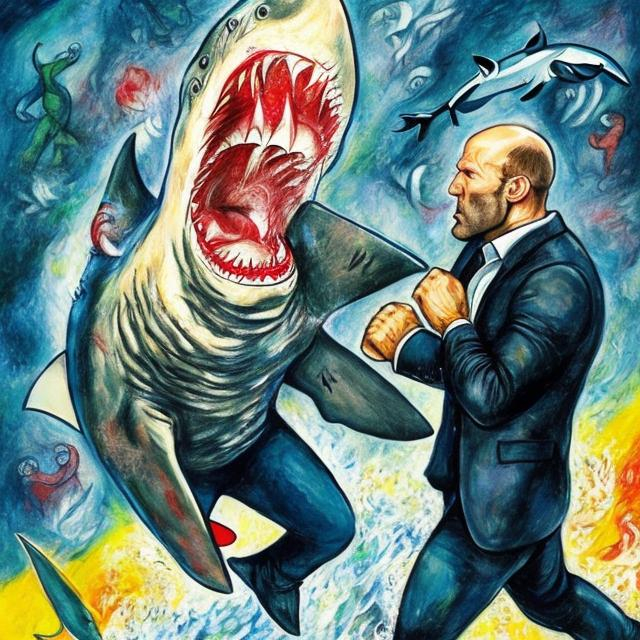
Rating: Three Out of Five on the BatShit Scale but Jason Statham Still Epitomizes British Blue Steel
In a world overflowing with both real-life absurdity and over-the-top cinematic escapades, “The Meg” emerges as an unexpected yet uncannily fitting parallel to the United States’ approach to the ongoing COVID-19 pandemic. Just as the characters in the movie ignore the obvious existence of a prehistoric shark the size of a skyscraper, the U.S. seems to be pretending that the pandemic has magically disappeared, like a cheesy magic trick where the rabbit never quite reappears from the hat. Let’s plunge even deeper into this epic tale of denial, with a generous splash of humor and a heaping serving of shark-sized parallels.
Directed by Jon Turteltaub, “The Meg” is a cinematic masterpiece that showcases humanity’s astonishing knack for denial, reminiscent of those who believe that the pandemic is merely an elaborate government conspiracy designed to control our Netflix preferences, our grocery lists, and possibly even our dreams. Picture this: Jason Statham, the action star with more muscles than a squadron of bodybuilders, facing off against a gargantuan, prehistoric shark. Yet, his heroic exploits are arguably more believable than the claims of some folks who think the pandemic is over because they’ve collectively decided that watching reruns of classic sitcoms will ward off the virus.
As we navigate these shark-infested waters, one can’t help but wonder what Jason Statham himself might say about the hubris and denial surrounding the USA’s handling of the COVID-19 pandemic. In his signature tough-guy style, Statham might quip, “You know, mates, I’ve tangled with some mighty sea monsters on-screen, but nothing quite compares to the audacity of pretending a global pandemic is just a bad dream. It’s like thinking you can fistfight a Megalodon and win. Newsflash: it ain’t gonna happen.”
Our protagonists in “The Meg” are a group of scientists who seem to hold advanced degrees in “Selective Denial Studies.” Despite an overwhelming body of evidence suggesting that a giant shark is just a few fin-flaps away, they choose to ignore it, much like how some people in the U.S. pretend that COVID-19 has vanished because they’ve decided to focus on making the perfect sourdough bread starter, practicing synchronized TikTok dances, and binge-watching every season of every show ever produced, including the never-ending, dramatic reality series known as “Pandemic Denial.”
If you thought the characters in “The Meg” had their heads buried in the sand (or should we say water), consider this: the film brilliantly portrays the characters conveniently forgetting about the impending doom as soon as they’re out of the water, like selective amnesia but with more shark teeth. It’s as if they’ve all collectively enrolled in a crash course on ‘Ostrich Behavior 101,’ with a mandatory final exam consisting of ignoring the painfully obvious. Sound familiar? Cue the laugh track, with a symphony of chuckles and facepalms.
But we haven’t even scratched the surface of the bewildering confusion and misinformation that have been as rampant as a shark feeding frenzy during the pandemic. Just as the characters in the film can’t agree on the Megalodon’s size and capabilities, many folks can’t seem to agree on even the most basic COVID-19 facts. Is it like the common flu? Is it a government plot? Is it caused by 5G towers? In both cases, the lines between fact and fiction blur faster than a shark zipping through the ocean on a caffeine binge, making even the wildest conspiracy theories seem plausible.
Now, let’s reel in the climax of “The Meg,” where Statham takes on the giant shark. It’s the ultimate showdown, filled with more adrenaline than a roller coaster ride and more plot twists than a telenovela on steroids. But guess what? Just like our hero’s triumphant moments in the movie, the U.S. has had its own share of COVID-19 victories, like vaccine rollouts and the gradual return to a semblance of normalcy. Yet, we continue to experience waves of infections, reminding us that the virus is as stubborn as a Megalodon with a toothache, or perhaps as resilient as the rumors that Bill Gates secretly controls the world through microchips in the vaccine (Spoiler alert: he doesn’t).
And so, in this tale of denial and colossal sea creatures, “The Meg” offers a compelling allegory for the United States’ approach to the COVID-19 pandemic. It’s a masterclass in denial, misinformation, and wishful thinking, served with a side of laughter and a sprinkle of absurdity. In both the movie and reality, denial won’t make the problem go away. So, it’s high time we face it head-on and stop pretending that our problems can be solved by actors with square jaws battling ancient sea monsters, or by hoping that the vaccine turns us into superheroes. We may not have Statham, but we do have science, vaccines, and a chance to make this sharknado of a pandemic history! The choice is ours – to be shark bait or pandemic-defeating superheroes. And remember, laughter may not cure the virus, but it certainly makes navigating these shark-infested waters a bit more bearable.
In conclusion, “The Meg” serves as an unexpectedly apt allegory for the United States’ handling of the COVID-19 pandemic. With its B-movie brilliance and over-the-top action sequences, it reminds us that denial won’t make a global crisis disappear. In the face of mounting evidence and a virus that refuses to go quietly into the night, it’s time to take a cue from Statham’s on-screen heroics and confront the challenges head-on. While the film may be fictional, the pandemic is all too real, and it’s up to us to be the heroes of our own narrative. So, let’s cast aside the denial, embrace the science, and work together to defeat this pandemic once and for all. In the end, it’s not about giant sharks or Hollywood heroes – it’s about our collective determination to overcome adversity and emerge stronger on the other side.
 Bat Shit Movie Reviews
Leave a comment